Passage
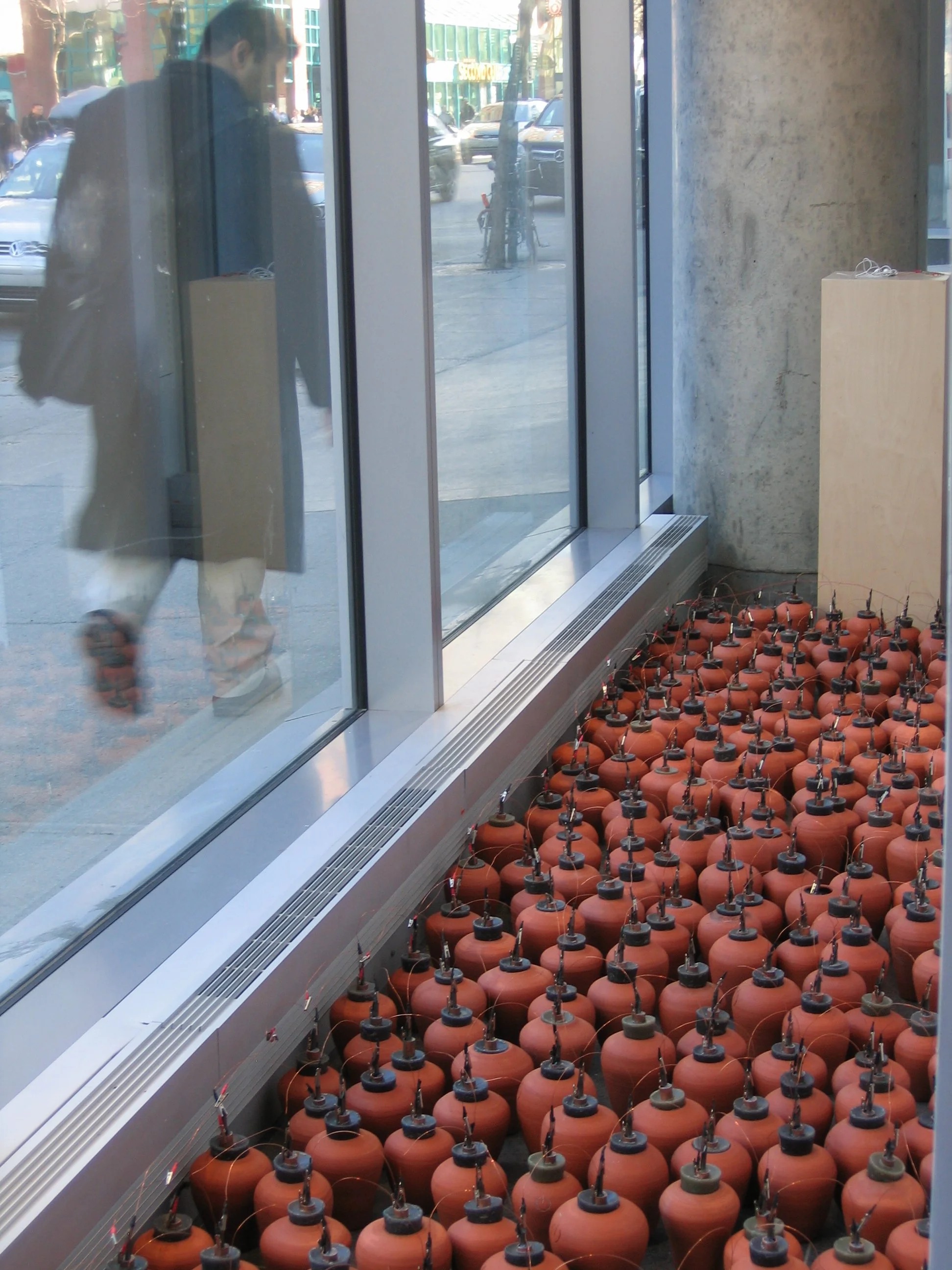
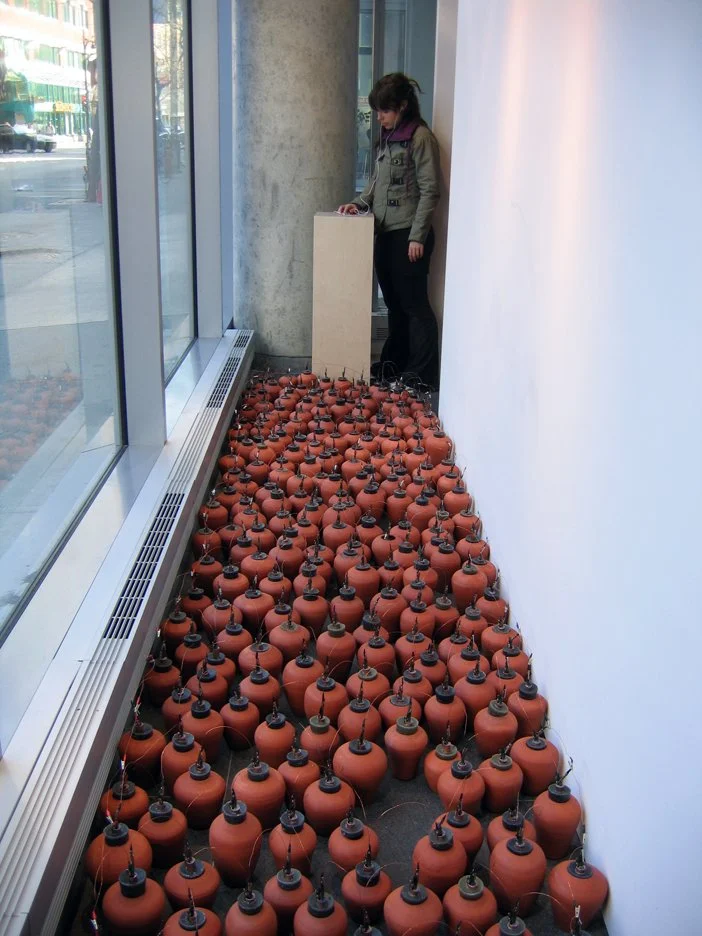
Installation at FOFA Gallery, Montréal, QC
Dimensions vary
Earthenware, Copper, Steel, Wax, iPod Shuffle (1st Generation)
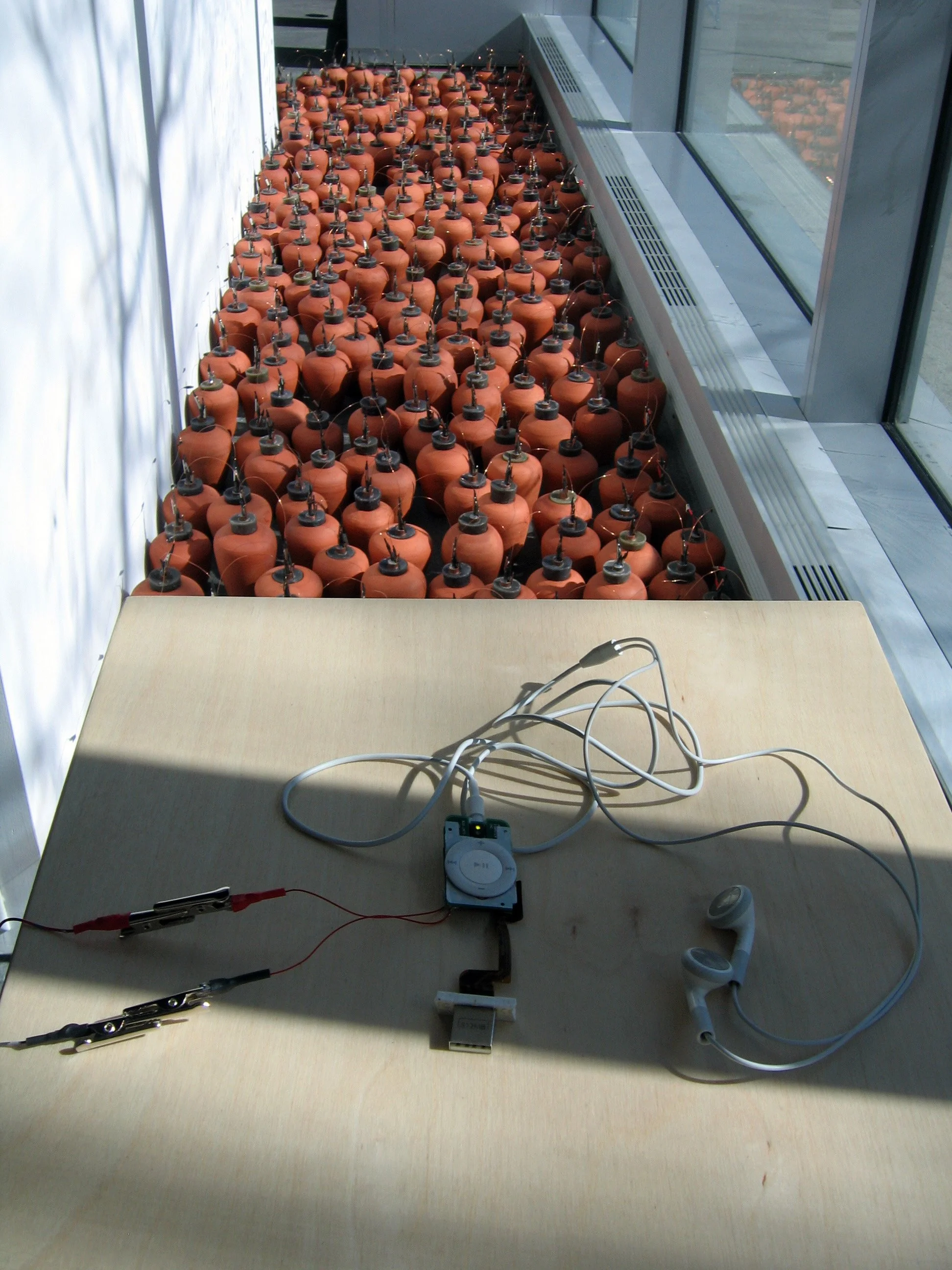
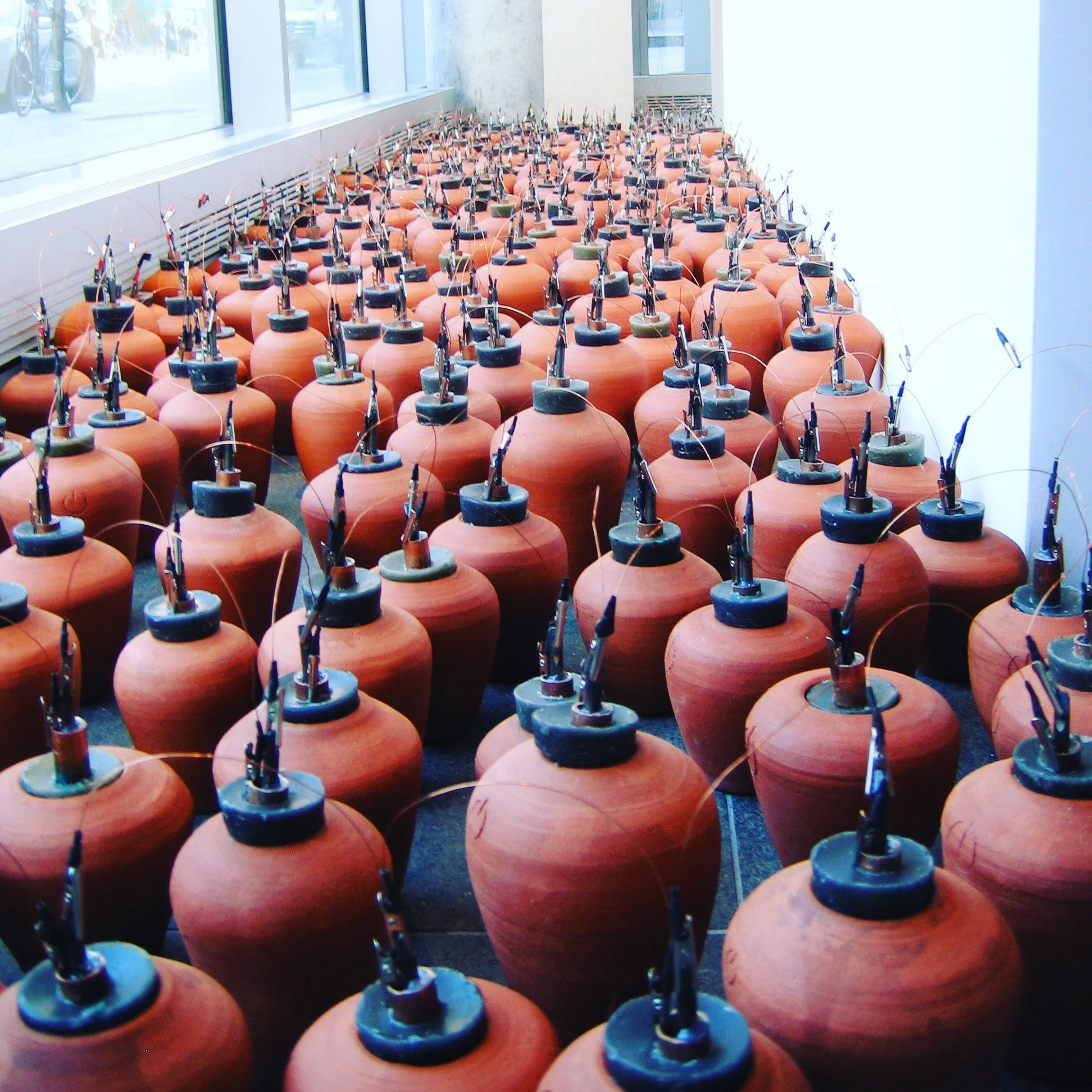
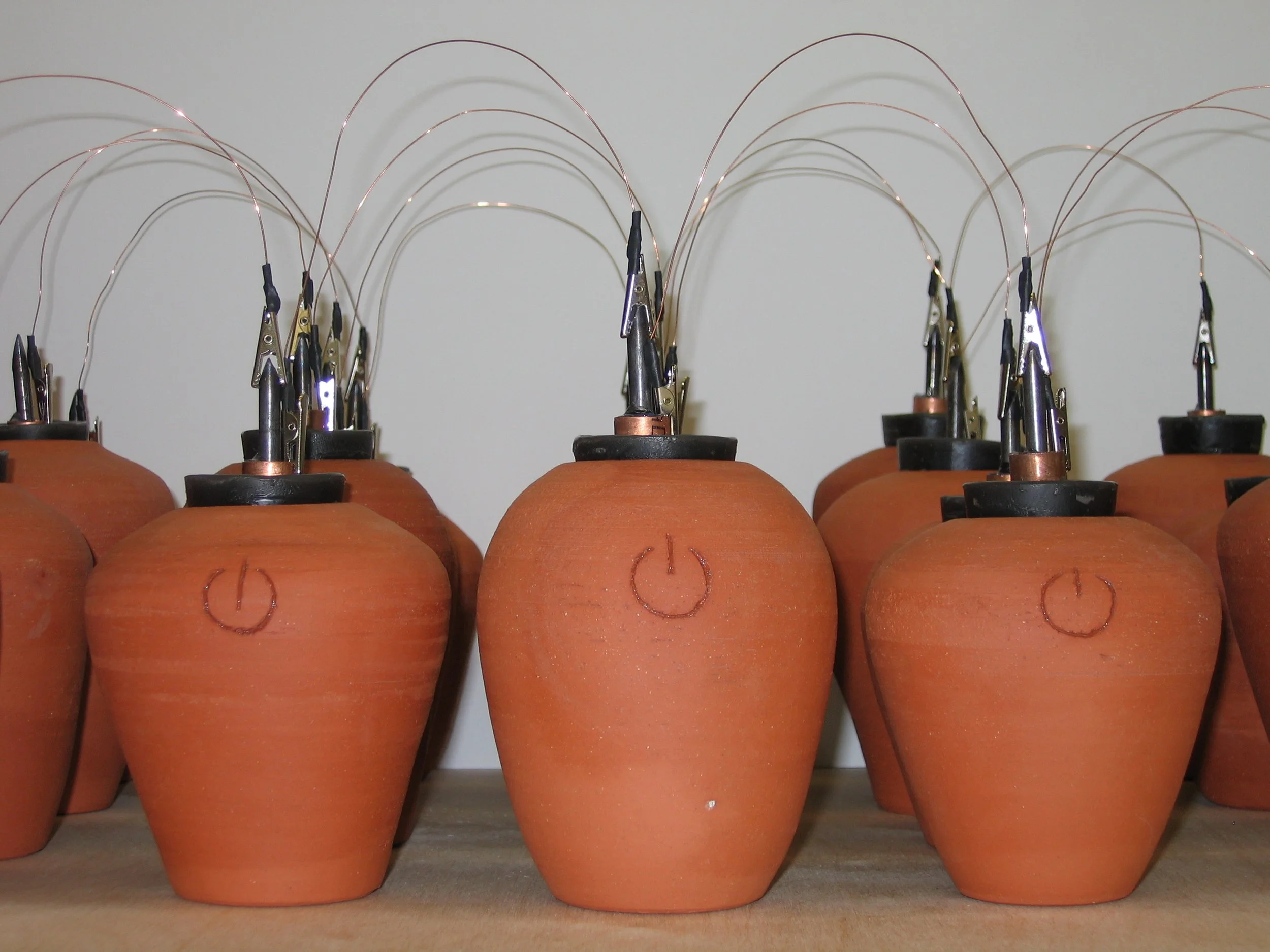
Passage connects 300 replicas of ancient batteries adapted to power an iPod shuffle with an audio component that documents the sounds of making the batteries.
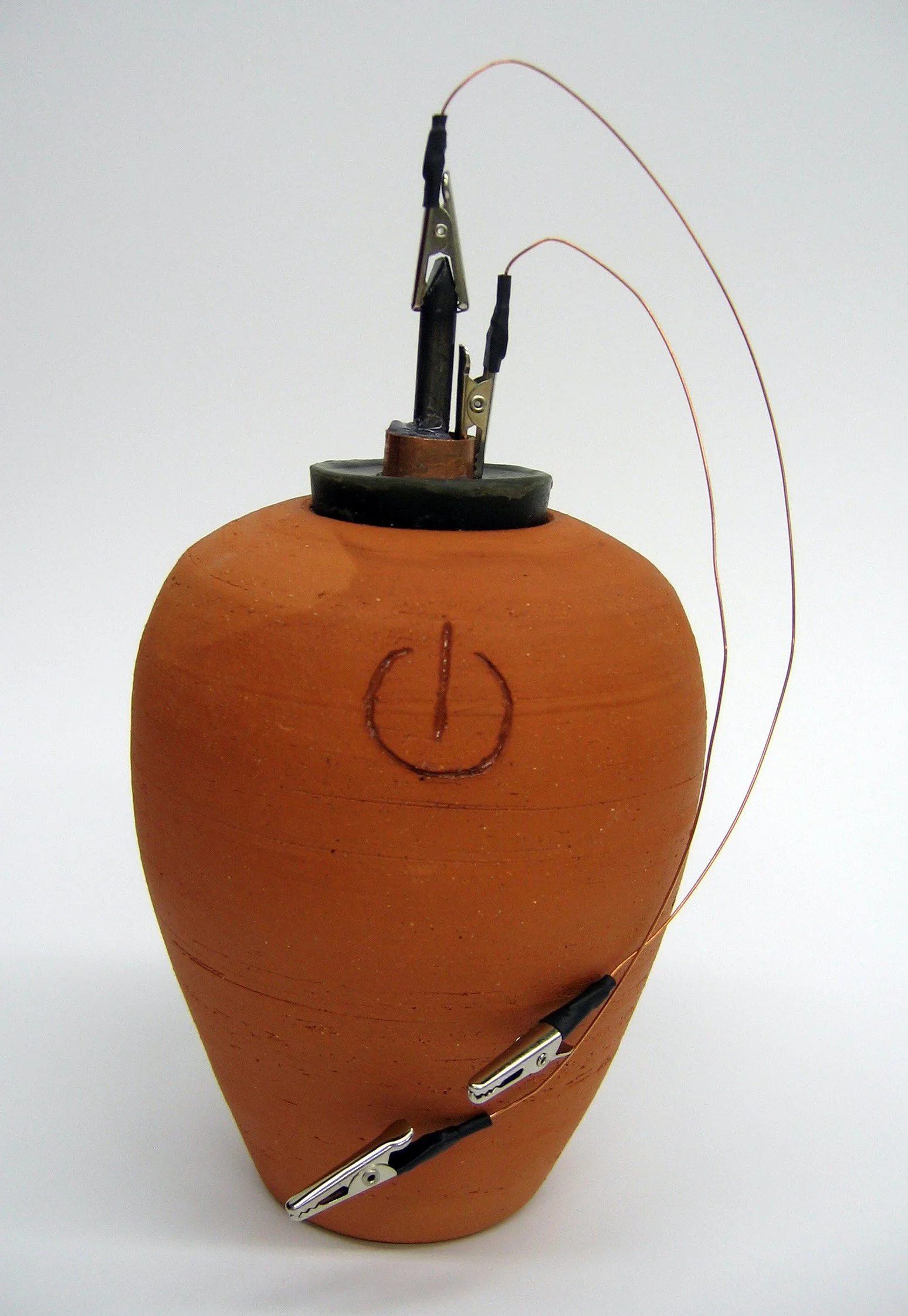
Passage draws on the Parthian cell (also known as the Baghdad Battery), an artifact recovered near modern-day Baghdad and dated between 200 BCE and 200 CE. The ancient battery consisted of a copper tube, iron rod, and electrolyte solution housed in a ceramic vessel. Learning about this cell prompted me to consider how technology has developed over time and how connected we are to the electronic devices we carry with us every day.
I began to wonder: how many of these ancient cells would be required to power an iPod? What would change if we had to physically carry the cumulative weight of technological evolution?
The installation recreates the Parthian cell using a tapered steel rod, copper tube, wax stopper, and vinegar-based solution. Each cell produces approximately 0.5 volts and a few milliamps. Linked together in a network of 300 units, the cells generate enough intermittent power to operate a first-generation iPod Shuffle for brief periods. The iPod has been decased, its internal battery removed, and rewired to connect directly to the assembled cells.
The device plays a layered recording of the battery-making process: pottery wheel, grinding metal, cutting steel, casting wax, mixed with a generic pop rhythm. The soundtrack reflects the labour embedded within technological systems and the pursuit of self-perpetuating evolution in electronic companions.